Song of the Day 001 - Masters of Chant (feat. Amelia Brightman) - Gregorian

Every few days, I’ll feature a song or track that I really enjoyed recently. It will range form mainstream, to the obscure and even video game music. I’m hoping to make exposure for music that you likely never heard the likes of. This is the type of music I enjoy and this is a window to my tastes.

Today, I’m bringing something from the New Age world. Although New Age is a very wide genre that ranges from Neoclassical to Meditative to Electronic, Masters of Chant fits perfectly within the genre. Chanting, instrumental, a mix of classical instruments and synths all are part of a recipe for New Age music.

Gregorian calls all their album Masters of Chant suffixed by a number in the order in which it was released. Each one contains popular songs that are sung in a Gregorian style. It sounds somewhat like church music and I’m sure more people would go if that’s what they sung over there. However, some of their songs are considered satanic and it would never fly in such a religious setting.

This is one of the few original songs by Gregorian unlike most of their pastiches. Surprisingly it comes out really well. The English is really hard to understand almost sounding like Latin sounding similar to Lesiëm. The song has no structure where each verse is different than the other which makes from an interesting progression.

My least favourite part is the chanting by Amelia Brightman. Although it worked for some songs like Voyage Voyage, I feel like it’s out of place. Her voice is a bit too high pitched and is a bit grating to my ears. It’s not horrible however, it’s still a pleasant part of the song.

In terms of instrumentation, it’s definitely in an epic style almost military with trumpets and drums. Very few modern instruments are used focusing on the classical side of things. It sounds a bit generic but it fits the vocals very well.

I’m not good at picking up lyrics from music and I find this one is difficult even to the most veteran of musicphiles. It has a bit of a religious and political undertone; it almost sounds like a national anthem seeking help from God, expressing brotherhood and a ton of allegories and metaphors. So I’ll leave the lyrics here to the side. Apparently, they’re written by Amelia.

Masters of Chant (feat. Amelia Brightman) - Gregorian

We're the masters of chant
We are brothers in arms
For we don't give up
Till time has come
Will you guide us God
We are singing as one
We are masters of chant
When the moon turns to dust
In the mist and the cold
You'll hear a song calling
Like a kiss from a rose
Like a diamond in blood
Like a light in the dark
We are masters of chant
I am the sound, I am the promise
And I will never fear the darkness
I join the light
For when they see us ride to glory
And if we end or start the story
We will rise
We're the masters of chant
Like a face in the crowd
When nothing else matters
We're standing proud
And our voice will command
With the power of sound
We are masters of chant
Will you bring us to life
Take us out of the cold
We'll find our way home
In fields of gold
In a world without end
Through skies and sand
We are masters of chant

- Amelia Brightman

Transforming Ottawa Computing Group into something more Social

Ottawa Computing Group started as a technology and computing enthusiast social club. The idea was to bring your computer and work on your project and talk about it at the same time. People helped each other work on their projects and show off what they were doing. However, I noticed that this was actually somewhat rare.

What I noticed is how often people went off topic whether it was psychology, philosophy, automotive, photography and technology of course. People came together to have interesting discussions and the computer was sitting there being unused save for a very few.

The meetup lost it’s original purpose and it’s time I take it into a different direction. I’m hoping this will attract more people to the meetup and widen the breadth and variety of specialists. I want the group to be the most freeform meetup that is available allowing people to do essentially whatever they want.

We’ll only be bridged together by a coffee shop or at least a Zoom online meeting for now. I’m very excited to hear what people have to say about this and would like to have my members share their ideas either commenting on this blog post or on Meetup.com.

Driving Therapy - Now on YouTube

I personally find driving to be very therapeutic and many others do as well. Not only does it allow time for pondering and reflection but the change of scenery helps refresh our thoughts. The sights and sounds can be stimulating and can keep our minds occupied and away from unpleasant ideas. Some are even inspired to go out on a ride themselves after seeing others drive.

To share that therapy with others, I've decided to record drives occasionally going around different places. All the videos will be uploaded on my YouTube Channel. Just like my ad-free blog, my channel is not monetized. I was inspired by Winding Road Magazine, World of Longplays and others to do this but unlike them I’m not focusing on the car but rather the scenescape and general driving experience. I’ll be adding subtitles as a commentary eventually including the roads taken, the direction, the type of road we're on and perhaps some history behind the road and the surrounding scenery.

Every few days, I'll be going through different parts of the City of Ottawa and nearby to explore the beautiful and admittedly sometimes bland scenery that this region has to offer. Ottawa is large and provides both rural and urban experiences with a combination of American and European styled-architecture. Feel free to suggest places I should drive to in the comments.

The soundscape will be provided by various environmental sounds and the music from the rumbling and purr of the Honda K20C4 engine. See the city early in the morning, in the evening and sometimes even at night. I'll make sure the experience is as engaging and interesting as possible with plenty of variety. The recording is done with a GoPro HERO8 with a head strap at 1080p60 for a clear and smooth picture. Sound is done in stereo for a more binaural feel. My car is an average family sedan, a 2019 Honda Accord Sport 2.0T with Manual Transmission. The video was edited using KDenLive.

I’m still adjusting the angle of the GoPro camera to get the optimal perspective. Sound might need some work as well. I’m quite short and that makes the view a bit awkward and high, I’ll have to find out a way to optimize the seating position to get a better picture. I’m also planning to edit out the long waits at intersections.

I recommend a listen through headphones. Set the video quality to 1080p60 for optimal viewing experience.

In each video, I’ll give a general itinerary of where we’ll be going and a short description of the features of the ride. Also linked will be a Google Maps link with the roads taken.

Please subscribe, comment and like if you enjoyed these videos. Again, this is my YouTube Channel

NES Musical Masterpieces

This article requires some knowledge of oscillation for producing sound. I’ll also confess that determining what chiptune sounds good requires an appreciation for them.

In my opinion, the Nintendo Entertainment System is the first video game console to feature games that have gameplay that still holds up to today. People still play NES for their playbility rather than solely their nostalgia factor. Older consoles like the Atari 2600 featured very simplistic games that gamers only play today for nostalgic reasons. Those who didn’t grow up with the Atari console don’t find any meaning in them.

I’m not sure if I mentioned this before on my blog, but I have an incredibly soft spot for chiptunes. There’s a charm to pushing these chips that can only make simple sounds to their limits to create a beautiful piece of music. I enjoy melodic music and what other than video games have solid and consistent melodies? There are some composers that I consider magicians because they make songs so deep that you’d put it in a club.

The NES APU, the sound chip in the NES, is what generates the simple tones to create music and sound through the console. Quality was lukewarm with the original Famicom and NES that outputed sound and video through a single coaxial cable. Eventually, a composite output was added providing a purer sound, though it was mono only despite many artists writing stereophonic music. Certain enthusiasts build mods to extract both channels.

There was five channels on the APU. Two pulse-wave (square) channels with four pulse-width settings in addition to a triangle channel. A random noise generator. Finally, a PCM for playing samples, although low-quality due to memory limitations.

I’ll give a basic explanation of how most games used these channels though some artists were more creative with their use. The two pulse channels supported the main melody, one was the main one and the other supported it (say with a slightly different pitch). The triangle channel was used to add bass. Finally, the noise channel was used for percussion.

Additional sound chips were used in cartridges that added extra channels or FM synthesis. I will talk about a few of these later but won’t cover all of them since there’s quite a few. I’ll go through some games that use them. Unfortunately, the sound chips could only be used on the Japanese Famicom since the NES didn’t have the sound passthrough through the cartridge slot. American ports of these games had to make shift with use of the available 5 channels and often the game sounded more muddled in comparison to their Japanese counterparts.

I want to take a dive into a few a games that have music that I consider ‘masterpieces’. There’s no real criteria other than my subjective tastes. Many won’t agree with me but I’m sure it will be appreciated by those who love ‘old things’. I hope you enjoy a few tunes and the order is set by my preference.

Super Mario Bros.

The overworld theme in Super Mario Brothers isn’t something I would consider a masterpiece. However, it’s such a classic that I felt that I had to include it here. There’s not much to comment about, it uses channels in the same way that most games do. Virtually everyone has heard some version of this song and I would consider it the prime example of chiptune.

Super Mario Bros. (World) (HVC-SM)_001.png
Super Mario Bros. (World) (HVC-SM)_003.png

Some noticed that parts of the music would be interrupted while jumping. It’s because all five channels were used for the music and nothing was left for sound. The sound effect would take place of one of the square wave channels so that it could play.

Mega Man 2

I would best describe Mega Man 2’s music as the ‘traditional’ sound of the NES. No special techniques are used for production, no intense melodies; just music that perfectly fits the atmosphere and theme of the level or the situation.

Mega Man 2 (USA)_001.png
Mega Man 2 (USA)_004.png

The boss of the stage, Quick Man, uses electricity as his weapon therefore the music has an electric sound to it. The music also plays at a faster tempo because of Quick Man was quicker than other bosses in the battle.

Mega Man 2 is an excellent example that simple music can still sound pleasant without the input of a master who knows every limitation of the chip and instead used it traditionally. Mega Man 2 uses the typical channel setup that was mentioned above for producing melody and beat.

One interesting fact about the composer’s goal was to create very simple melodies only composed of a few notes. The idea was to make catchy songs that were almost as simple as a pop song with a similar structure.

Silver Surfer

Tim Follin is probably the composer with the worst luck. He pushed soundchips to their limits making some amazing pieces except there was one caveat, the games he was contracted for were absolutely terrible.

Silver Surfer was torn apart more than a decade ago by The Angry Video Game Nerd. It sent him into a fit of endless cursing and swearing. However, he oddly didn’t comment on the amazing music in the game. Maybe he was too distracted by the awful gameplay.

The insanely fast paced music almost sounded something that would come out of the SID Chip on the Commodore 64. It was demoscene quality to be honest. He even managed to produce a convincing electric guitar sound.

Silver Surfer (USA)_001.png
Silver Surfer (USA)_002.png

The kick sound isn’t created with the usual DPCM sample like done in most games. Instead the triangle channel is with a pitch change is used to create a quick thump. He uses the same channel for the kick but what really showed that Tim Follin was a master at his art is that the two never played at the same time. It required quite a bit of creative production to never have them clash.

I really want to highlight how bad his luck is. Imagine being the composer for a Pictionary game, I’m sure you’d write something atmospheric and melow. Instead, Follin decided to compose something that would fit an Action-Adventure game where you’d be saving the galaxy from mutant aliens.

This is unusually intense for a board game but perhaps this was to make up for the boring nature of the game. I wonder what kind of music we’d end up with if he was composing for Chess Master.

Admittedly, Tim Follin confesses that he often didn’t compose music to follow the theme of the game but rather see what he could do with the limitations of the sound chip. That might explain the situation with Pictionary.

Pictionary - The Game of Video Quick Draw (USA)_001.png
Pictionary - The Game of Video Quick Draw (USA)_002.png

Journey to Silius

If any game completely broke the rules on the traditional method of using channels, it’s Journey to Silius. The artists did an amazing job of creating something that sounded so much fuller than the average NES game. The bass was stronger, the melodies more engaging and a beat that sounded completely different.

The two pulse channels were still used for the melody but instead of using the noise channel for the drums only, they combined the noise and triangle channels to create a very realistic sounding drum. This was because attack was done with the noise channel and decay using the triangle channel. However, the stroke of genius was using the traditionally unused DPCM sample channel for the bass. The samples used for the bass are pretty high quality and provide for that deep sound we crave when listening to music.

Journey to Silius (USA)_005.png

Castlevania 3

The music between the American and Japanese Castlevania sound completely different. This is due to the use of a chip VRC6 which adds two square wave channels (pulse) and one sawtooth channel. It’s not secret that having additional channels creates for a deeper sound and this is definitely the case for Akumajou Densetsu. There’s not much to comment other than to listen.

Akumajou Densetsu (Japan) (Virtual Console)_002.png

It’s quite obvious that the American version sounds much more dull. The artists didn’t really use any creative techniques to make up for the missing VRC6 chip. Instead, they used the typical arrangement using channels to generate beat and melody. It’s a bit disappointing.

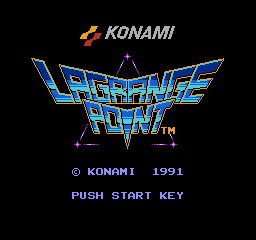
Lagrange Point

Lagrange Point doesn’t sound like any NES game in existence. Rather than primitive sounds, we hear a pleasant and smooth track being played. This is due to the use of a special chip, the VRC7, which adds 6 channels of FM Synthesis. The sound produced ends up reaching 16-bit territory.

I won’t go into detail of what FM Synthesis is because I’m leaving that for another blog post. However, it can be noted that the VRC7 is used exclusively for the music while all other sounds effects are still done with the NES APU. The contrast between the two sounds is a bit jarring in my opinion and generates a disjumbled mess of 8-bit and 16-bit sound. I have to admit it’s quite strange to see 8-bit graphics with 16-bit sound, it doesn’t feel right.

Lagrange Point (Japan)_001.png

Gimmick!

Gimmick! (Japan)_002.png

This company is playing its magic tricks again. If anyone could make the 8-bit NES sound and look 16-bit, it would be Sunsoft. Wikipedia lists some of the amazing techniques to generate such beautiful graphics using mostly graphics tiling optimizations.

My favourite track is an unused one, Strange Memories of Death. It has all the elements of a good song, catchiness, good production, a rich sound and oddly a dark undertone which flows really smoothly.

Gimmick was the only game to use the Sunsoft FME-7 chip which contained the Sunsoft 5B. It contained extra channels which the game used mostly to produce more bass (similar to Journey to Silius). Interestingly, the game didn’t make use of all the channels of the chip neither were all the features such as noise. It’s also the only game that uses the chip.

I put Gimmick! last on this list because it’s my favourite soundtrack on the NES. It spans multiple genres and sounds like a mix of different video game music styles. Apparently, this is what the artist intended. It has a rich deep sound unparalleled by any other NES game and I bet the bass would sound nice on a decent set of speakers or headphones.

Conclusion

This was just a small sampler of some of the good music that is on the NES. I haven’t played that many NES games and had to find other ways to discover interesting music. There’s a lot to listen to on grad1u52’s YouTube channel though unfortunately they add a reverb effect to the music which puts it further away from the original.

Chiptunes are an acquired taste for most people who are used to pop but I consider those to be simple music as well. I have shared with peers these songs and they have found them interesting but it didn’t light them up. It was just something that sounded different to them.

My next writing adventure will be about FM Synthesis which is my favourite way of generating sound. Most focus will be on the Yamaha YM2612 in the Sega Genesis and perhaps the OPL2 from the AdLib PC sound card.

If you have your favourites on the console, feel free to share them. Other kinds of chiptunes are welcome in the comments section below.

Isolation...

These uncertain times have driven me nuts. I’m stuck at home no what I’m doing whether it’s working remotely or talking to loved ones. All you get is virtual interaction, but it’s not the same. You can’t feel people vibes behind a screen, it’s just a flat representation of them.

I have to stay home all the time. I want to see my family and sometimes I take risks even though I shouldn’t see them. I’m tempted to go to my friends’ domiciles. I want to give gifts but they might be contaminated. I don’t know.

I can’t host my meetup anymore. Other meetups that I join are all online instead of being around a table. My part-time driving job has come to a halt because everything non-essential has been closed and people are trapped at home. I get no riders and I’m scared they’ll pollute my car with the illness. Your appointments are virtual too, and even worse sometimes on the phone. How are they going to see your facial expressions and body language to know how you really are. How will they feel your pain when all you have is sound.

Going outside is scary, it feels like a taking a risk everytime and I have to admit I’ve taken big ones. It makes me anxious. People don’t seem to know how to protect themselves or others. Few have read what the experts have recommended to us. I feel unsafe because the rules aren’t being followed.

You never know when someone has it, maybe I do but I’m not reacting to the monster. Someone else may be the same but the reaction on me might be severe enough to send me for admission.

People with conditions are getting tired of all of this. Even healthy people are developing anxiety and stress because of this mess. I want my life to go back to normal and everyone does too. Even health care workers are getting sick of all the extreme protections they have to do, and even with that, people get hit with it anyways.

The timelines are uncertain and picking the wrong time might cause everything to spread again. Maybe in a few months, or next year, no one can give me an idea. How do we control something that spreads so quickly.

Scientists are doing their research to find treatments and other forms of protection from this disease. Yet it is not something that is discovered in a few months. There’s a ton of paperwork and trials needed to get things approved. It’s not going to be tomorrow.

I can’t put on my calendar when we’ll all be free again because no one knows when.